Choosing a foam roller
Decide which movements you already know how to perform comfortably.
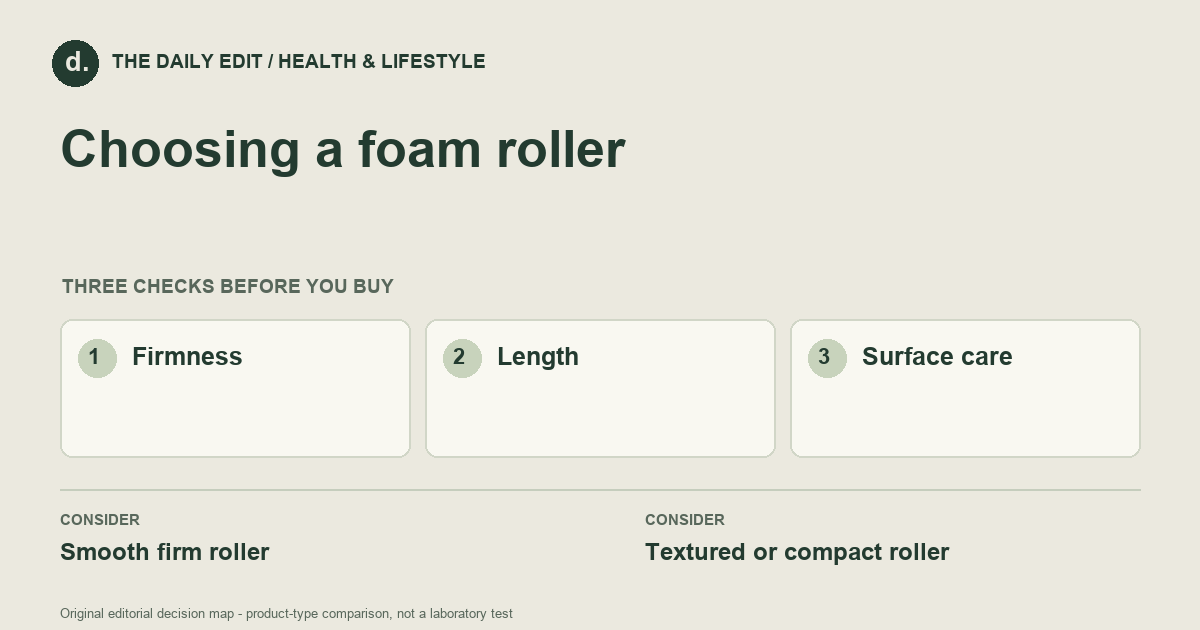
What to look for before you buy
Compare length, surface texture, firmness, and ease of cleaning.
1. Firmness
Try gentle contact first; a harder roller is not automatically more useful.
2. Length
Choose enough width for the movements you already use comfortably.
3. Surface care
Check whether the material tolerates your planned cleaning and dries easily.
Compare the main options
Limited storage versus wider support
Someone with a small cupboard may prefer a short roller if it covers the intended familiar movements. A wider roller provides more surface but needs more room. Try gentle, controlled use and do not interpret greater pressure or discomfort as evidence of a better purchase.
| Approach | Advantages | Trade-offs | Best suited to |
|---|---|---|---|
| Smooth firm roller | Offers a consistent surface and is easy to wipe. | Can feel too firm for some users. | Familiar movements where a plain surface is preferred. |
| Textured or compact roller | Provides a different contact pattern and may store easily. | Texture can feel intense and short rollers offer less support area. | Users who already know the feel and size they prefer. |
Comparison of product types, rather than tested model rankings. On small screens, scroll the table horizontally.
Where to spend — and where to simplify
Start with a simple size and surface that you can use comfortably in a familiar routine. Pay for sound construction and cleanability before complex texture or vibration features. A compact roller can be good value when it supports the movements you already use; buying an aggressive surface on treatment promises is a different and unproven decision.
Frequently asked questions
Is a harder roller always better?
No. Choose a comfortable, controllable feel for familiar movements rather than pushing through discomfort.
Does a textured roller replace professional advice?
No. If you have pain, an injury, or a condition affecting activity, ask a qualified professional about appropriate use.
Should a purchase be based on claims to fix pain?
No. Compare equipment characteristics here; ask a qualified professional about pain, injury, or whether an activity is suitable for you.
Cover photograph: nadin sh 78971847 · Pexels License. Photo details. Illustrative photograph; not a tested product recommendation.
Sources and what they support
References checked 17 October 2026. Model-specific instructions remain specific to that model; a source link is not a product endorsement.
- ACE: foam rollers, should you use them?Professional guidance
Exercise professional body's practical roller guidance and discussion of its sponsored research; not a medical treatment claim.
AI-assisted editorial analysis; no hands-on product testing has been conducted for these guides. Read our editorial approach. Verify current specifications, care instructions, compatibility, and return terms for the exact item before ordering.


